Myths about lying: how our eyes actually react during deception
A new study from Ulm University debunks the stereotype that liars avoid eye contact.
 ⚽Sport
Photo: TSN
Key points
- Liars blink less frequently and fix their gaze longer
- Pupil dilation indicates attention, not just lying
- Laboratory conditions do not reflect the complexity of real-life communication
- The accuracy of detecting lies through facial expressions is only 54%
For a long time, it was believed that a person telling a lie would inevitably avert their gaze or blink nervously. However, an experiment by German scientists at Ulm University proves the opposite: when concealing information, eye behavior becomes more static.
Details of the scientific experiment
The study involved 36 volunteers who performed tasks involving information concealment while being monitored by specialized equipment. The results showed that when participants attempted to lie, they blinked significantly less, and their gaze became more fixed and prolonged, especially when looking directly at the interviewer.
Researchers also observed pupil dilation at the moment of recognizing the hidden information. However, the scientists emphasize that this indicator is not a universal marker of deception, as it can also indicate mental effort or increased attention.
"Eyes can indeed reveal certain human reactions, but pupil dilation, less frequent blinking, or a prolonged gaze alone are not enough to accuse someone of lying," the study authors note.
It is important to understand that laboratory conditions differ from everyday life, where a person is influenced by fatigue, excitement, and emotions. The effectiveness of detecting the truth through facial expressions remains low, so experts advise focusing on fact-checking and the logical consistency of narratives.
Source TSN — tsn.ua/tsikavinki/ochi-zavzdy-vydaiut-pravdu-u-brekhuniv-vyiavyly-tsika… ↗
Read next
 🇺🇦Ukraine
Impact of attacks on Russian oil refineries: Kremlin threatens response and admits fuel shortages
Vladimir Putin has declared that retaliatory strikes are inevitable following attacks on Russian oil refineries, while acknowledging the complex situation within the coun…
 👥Society
Why LEGO minifigure heads have a hole: a hidden safety feature
LEGO has designed a small hole in the heads of its minifigures, which serves as a vital safety feature in case a child accidentally swallows the piece.
 💼Economy
How to optimize New Year's expenses: tips for Zhmerinka residents
Experts recommend a balanced approach to holiday shopping to avoid unnecessary spending before the New Year.
 💼Economy
Gas exports to generate over 800 million UAH in rent payments
The Association of Gas Producing Companies of Ukraine expects significant budget revenues from the export of 83 million cubic meters of gas.
 🏛️Politics
Debate on NABU and SAPO Accountability: Balancing International Cooperation and Parliamentary Oversight
The absence of anti-corruption agency heads at a parliamentary commission hearing due to overseas trips has sparked a debate on the priority of legislative oversight.
 🛡️Security
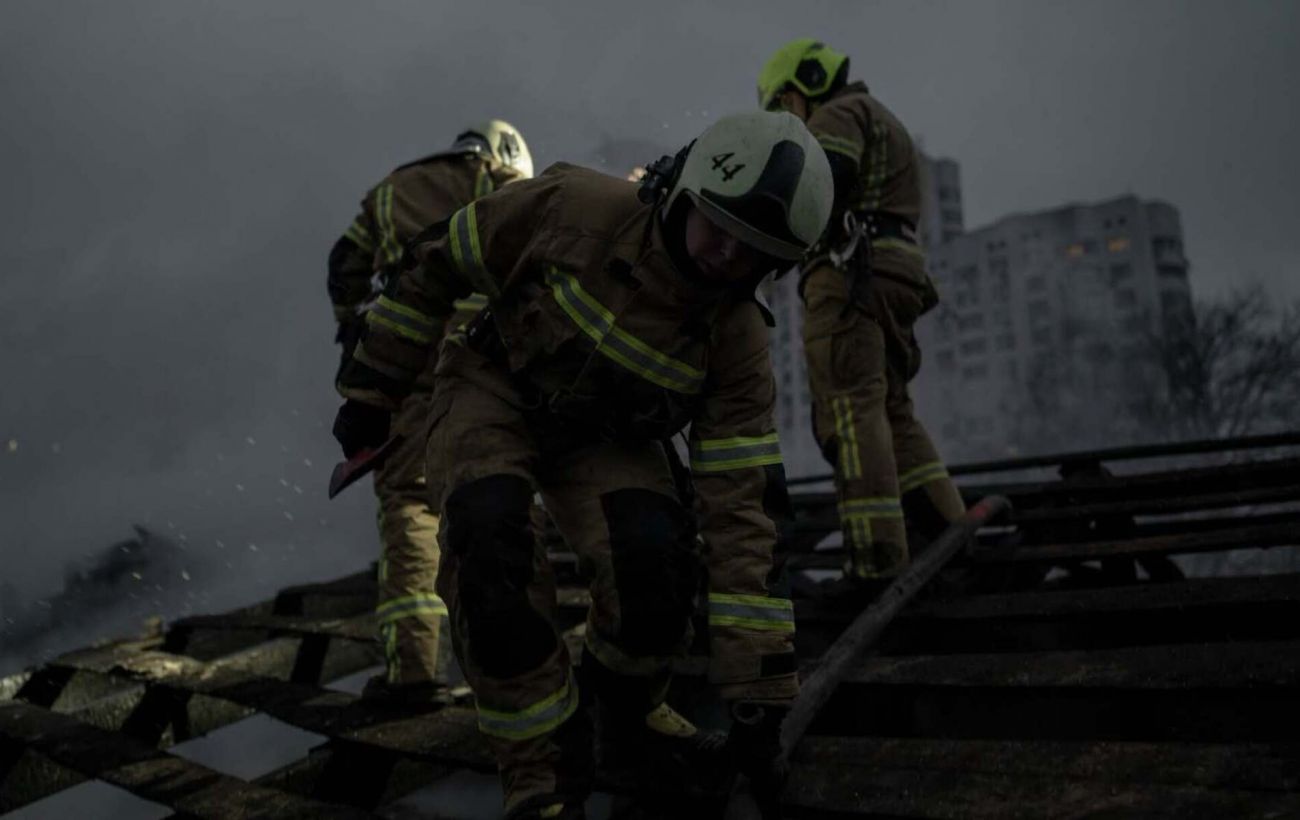
Consequences of the Russian attack on Kyiv: fires extinguished
On November 24, an enemy drone caused a fire at warehouse facilities in the Holosiivskyi district of the capital.